


There’s a particular category of travel that has always existed alongside more conventional tourism, older than the concept of vacation itself, older even than most modern national borders. Pilgrimage, in one form or another, has drawn people toward sacred mountains, ancient temples, and remote monasteries for thousands of years, motivated not by sightseeing but by something considerably harder to name: a hope that distance, difficulty, and deliberate intention might open a door that ordinary daily life keeps firmly shut. In recent years, this older impulse has resurfaced with striking intensity, not replacing conventional travel but existing increasingly alongside it, as growing numbers of travelers seek out destinations specifically for their spiritual weight rather than their photographic appeal. The trip, in these cases, isn’t simply a break from routine. It’s framed, often quite explicitly, as a search.
Why This Kind of Travel Is Resurging
Understanding the renewed appeal of spiritually oriented travel requires looking honestly at what it’s responding to. Surveys of traveler motivation conducted by tourism researchers in recent years have consistently identified a growing segment of travelers citing “personal growth,” “self-discovery,” or “spiritual connection” as a primary reason for a trip, categories that would have registered as a fairly niche motivation in tourism research a generation ago but now represent a significant and steadily expanding portion of overall travel intent. This shift tracks closely alongside broader cultural patterns researchers have documented around declining religious affiliation in many countries, particularly across the West, paired paradoxically with steady or even increasing interest in spirituality more broadly defined, a distinction sociologists sometimes describe as “spiritual but not religious,” a growing population searching for meaning, transcendence, and a sense of something larger than themselves, but often doing so outside the structure of any single organized religious tradition.
Travel, in this context, has become one of the more accessible avenues available for pursuing that search, offering physical distance from ordinary obligations, genuine novelty, and often direct exposure to traditions, practices, and sacred sites built specifically, over centuries or millennia, to facilitate exactly the kind of reflection and transcendence many travelers are now seeking independently of formal religious belonging. A temple built to inspire awe, a pilgrimage route designed to induce reflection through sustained physical effort, a monastery structured around silence and simplicity, these environments were engineered, often quite deliberately by the traditions that built them, to produce specific psychological and even physiological states, and secular travelers are increasingly drawn to them for precisely that engineered effect, whether or not they hold the underlying religious beliefs the sites were originally built to serve.
Ancient Pilgrimage Routes Finding New Travelers
Among the clearest examples of this trend is the dramatic resurgence of interest in historic pilgrimage routes, physical, multi-day or multi-week walking paths originally established for religious purposes but increasingly walked today by travelers with a far broader range of motivations. The Camino de Santiago, a network of routes across Spain and Portugal converging on the cathedral believed to hold the remains of the apostle James, has seen registered pilgrim numbers climb dramatically over the past two decades, from roughly a few thousand annually in the early 1980s to several hundred thousand in recent years, the overwhelming majority of whom, by the route’s own recorded statistics, cite reasons other than strictly religious observance as their primary motivation.
What draws so many walkers to a multi-week trek without any particular religious commitment is worth examining specifically, because the pattern repeats across other historic pilgrimage routes as well, Japan’s Kumano Kodo trails through the Kii mountains, India’s various Himalayan pilgrimage circuits, the network of routes converging on Mount Kailash in Tibet. Sustained physical exertion over multiple days, particularly walking, appears to produce a specific psychological effect distinct from shorter forms of exercise, researchers studying pilgrimage experiences have documented a common arc among modern walkers regardless of religious background: an initial period of physical discomfort and mental restlessness, followed, often around the fourth or fifth day of sustained walking, by a distinct psychological shift frequently described by walkers as a quieting of mental chatter, an increased capacity for unstructured reflection, and, for many, moments of genuine emotional release or insight that hadn’t been consciously sought but seemed to emerge naturally from the sustained rhythm of walking itself.
Anthropologists and psychologists studying this phenomenon have proposed several contributing mechanisms: the meditative, repetitive quality of extended walking, the removal of ordinary decision fatigue once a walker is simply following a marked route rather than managing an itinerary, and the social structure many pilgrimage routes naturally produce, temporary, often deeply meaningful connections with fellow walkers who share none of the traveler’s ordinary social context, creating a kind of temporary community built entirely around the shared, deliberate difficulty of the journey itself, distinct from any relationship formed under more ordinary circumstances.
Sacred Architecture and the Psychology of Awe
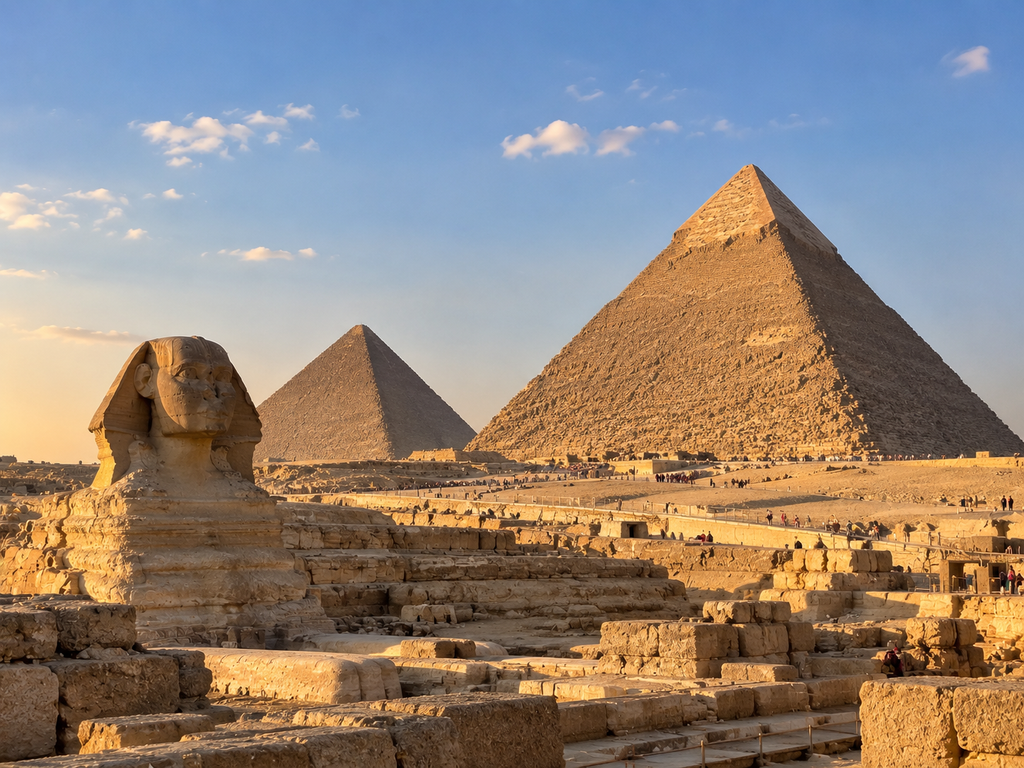
Beyond the pilgrimage routes themselves, the destinations at their endpoints, and sacred sites more broadly, appear to produce their own distinct psychological effect, one researchers studying emotion increasingly describe using a specific term: awe. Awe has become a genuinely active area of psychological research in recent years, defined generally as the emotional response to encountering something perceived as vast, whether physically, conceptually, or spiritually, that requires a person to update their existing mental frameworks to accommodate it. Sacred architecture, grand cathedrals, ancient temple complexes, monasteries built into dramatic mountain landscapes, was frequently designed, whether explicitly understood in these terms by its original builders or not, specifically to produce this response, scale and design deliberately calibrated to overwhelm ordinary perception and induce a sense of the traveler’s own smallness relative to something larger.
Research on awe has found genuinely measurable psychological effects associated with experiencing it: reduced self-focus, increased feelings of connection to others and to something larger than oneself, and, in several studies, improvements in mood and life satisfaction that persist beyond the immediate moment of the awe-inducing experience itself. Some researchers have proposed that awe functions, at least in part, as a kind of psychological reset, temporarily interrupting the ordinary, self-referential mental chatter that dominates much of daily cognition and replacing it, briefly, with a different, more expansive mode of attention. Sites like Angkor Wat in Cambodia, the ancient temple complex at Borobudur in Indonesia, or the monasteries of Bhutan built into near-vertical cliff faces, draw increasing numbers of travelers specifically seeking this experience, an encounter deliberately engineered by builders working centuries or millennia ago to produce exactly the psychological effect modern researchers are only now beginning to formally document and explain.
Structured Spiritual Retreats as a More Accessible Entry Point
For travelers unable or unwilling to commit to a multi-week pilgrimage, structured spiritual retreats have emerged as a considerably more accessible alternative, offering a compressed, more manageable version of a similar underlying experience. These retreats vary enormously in tradition and structure, Buddhist meditation centers throughout Southeast Asia, ashrams across India built around specific yogic and meditative traditions, Christian monastic retreats increasingly opening their doors to secular visitors seeking silence and simplicity rather than religious instruction specifically, but they tend to share a common underlying design: removal from ordinary routine, a structured daily rhythm built around reflection or practice rather than entertainment or leisure, and often a degree of simplicity or asceticism, simple meals, basic accommodation, minimal or no technology, deliberately engineered to strip away the usual sources of distraction and comfort that ordinary life provides.
Travelers who complete these retreats frequently describe an experience distinct from conventional vacation relaxation, often noting that the retreat felt, at least initially, considerably more demanding than restful, requiring early rising, sustained periods of stillness or meditation that can feel genuinely uncomfortable for newcomers, and an unfamiliar simplicity that takes real adjustment. Yet the reported outcomes, described consistently across a range of traditions and specific programs, tend to center on similar themes: a recalibrated sense of what genuinely matters once removed from the accumulated clutter of ordinary obligations and distractions, a renewed capacity for sustained attention and reflection, and, for many, insight into personal patterns, habits, or priorities that had become invisible simply through the accumulated momentum of daily routine.
The Difference Between a Vacation and a Journey Within
What distinguishes this category of travel from more conventional tourism isn’t primarily the destination but the orientation travelers bring to it. A conventional vacation is generally organized around external experience, sights seen, activities completed, memories collected as a kind of record of where one has been. Spiritually oriented travel, by contrast, tends to be organized around internal experience, what a place, a practice, or a period of sustained difficulty and simplicity reveals or shifts within the traveler themselves, with the external destination functioning less as the point of the trip and more as the specific set of conditions engineered to make that internal shift more likely to occur.
This distinction helps explain why travelers frequently describe these journeys using language notably different from how they’d describe an ordinary vacation, less about what was seen and considerably more about what was felt, understood, or changed, a personal, often difficult-to-fully-articulate sense that something meaningful occurred that has little to do with the itinerary itself and considerably more to do with the specific, deliberate conditions of distance, difficulty, silence, or awe that the trip was designed, consciously or through the accumulated wisdom of much older traditions, to create.
A Very Old Impulse, Newly Rediscovered
The growing popularity of pilgrimage routes, sacred sites, and structured spiritual retreats reflects something considerably older than any current travel trend, the same basic human impulse that built cathedrals, carved temples into mountainsides, and established walking routes stretching hundreds of miles long before modern tourism existed in any recognizable form. What’s changed isn’t the underlying impulse but its context: a considerably more secular, digitally saturated, and attention-fragmented culture, searching, often without quite the vocabulary its predecessors had for the same search, for something these older traditions were built specifically to provide. The journey within, it turns out, was never really a new idea. It’s one of the oldest reasons humans have ever traveled at all, simply rediscovered, again, by a generation that finally has the distance, and the need, to go looking for it.
